
Why Every Business Needs a Digital Marketing Strategy in 2026
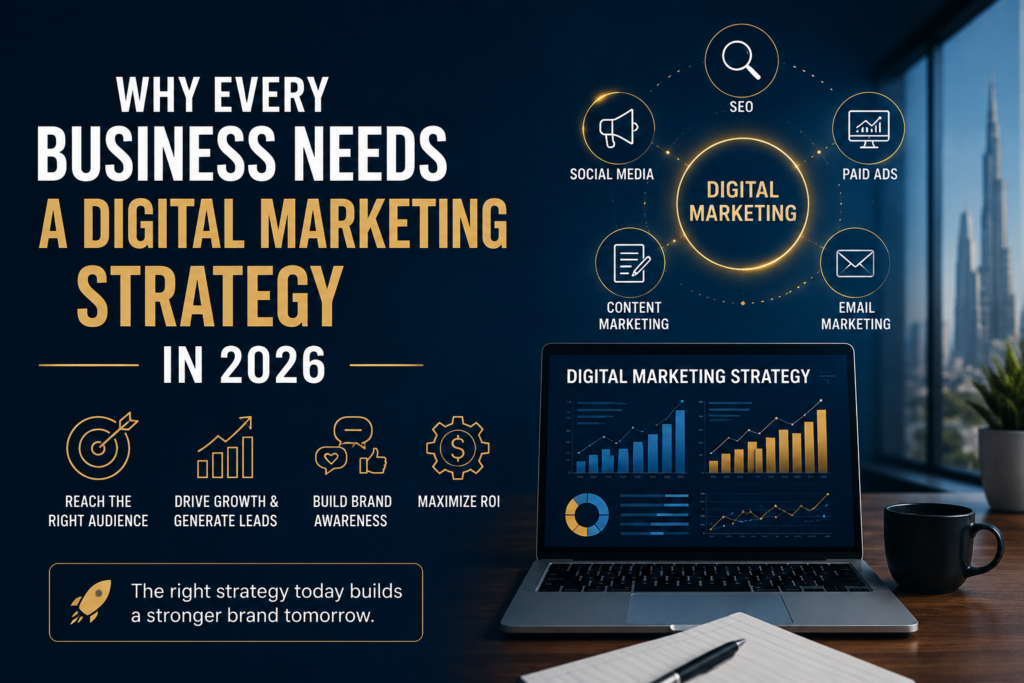
In today’s digital-first world, having a website or a few social media accounts is no longer enough. Customers are more informed, competition is increasing across every industry, and artificial intelligence is changing the way people discover products and services. Businesses that rely solely on traditional marketing or random online activities risk falling behind.
This is where a well-planned digital marketing strategy becomes essential.
Whether you’re a startup, a small business, or an established company, a clear strategy helps you reach the right audience, generate qualified leads, improve brand awareness, and achieve measurable business growth. In 2026, digital marketing isn’t just another marketing channel—it’s the foundation of sustainable business success.
In this guide, you’ll learn why every business needs a digital marketing strategy in 2026, the key elements of an effective strategy, emerging trends, common mistakes to avoid, and practical steps to build a strategy that delivers real results.
What Is a Digital Marketing Strategy?
A digital marketing strategy is a structured plan that outlines how a business will use online channels to achieve specific goals. Instead of posting content randomly or running ads without direction, a strategy ensures every marketing activity contributes to measurable business objectives.
A successful digital marketing strategy typically includes:
- Search Engine Optimization (SEO)
- Content Marketing
- Social Media Marketing
- Paid Advertising (Google Ads & Social Media Ads)
- Email Marketing
- Analytics and Reporting
- Conversion Rate Optimization
- Lead Generation
Rather than focusing on individual tactics, a strategy brings all these channels together into one cohesive plan.
Why Digital Marketing Matters More Than Ever in 2026
Consumer behavior has changed dramatically over the past few years.
Today, people search online before making almost every purchase. They compare reviews, browse websites, watch videos, and interact with brands on multiple platforms before making a decision.
At the same time, search engines have become smarter, AI-powered search experiences are becoming more common, and competition for online visibility continues to grow.
Businesses that fail to adapt risk becoming invisible to potential customers.
A digital marketing strategy ensures your business stays visible, relevant, and competitive.
1. Customers Begin Their Journey Online
Regardless of your industry, your potential customers are already searching online.
They might search for:
- Products
- Services
- Reviews
- Comparisons
- Pricing
- Local businesses
- Educational content
If your business doesn’t appear where customers are searching, you’re losing opportunities to competitors who have invested in digital marketing.
Your strategy should ensure your business is discoverable across search engines, social media, and other relevant platforms.
2. A Strategy Gives Your Marketing Clear Direction
Many businesses spend money on marketing without a defined plan.
They publish occasional social media posts, run advertisements for a few weeks, or update their website only when necessary.
Without a strategy, it’s difficult to know:
- Who your target audience is
- Which platforms deserve attention
- What content should be created
- How success should be measured
- Where marketing budgets should be invested
A digital marketing strategy aligns every marketing effort with clear business goals.
3. Better Return on Investment (ROI)
One of the biggest advantages of digital marketing is measurability.
Unlike traditional advertising, digital campaigns provide detailed insights into:
- Website traffic
- User behavior
- Conversion rates
- Cost per lead
- Customer acquisition cost
- Return on ad spend
- Revenue generated
This allows businesses to optimize campaigns continuously instead of relying on guesswork.
Every marketing decision becomes data-driven.
4. SEO Continues to Be One of the Highest-Performing Marketing Channels
Search Engine Optimization remains one of the most valuable long-term investments for businesses.
Ranking higher on search engines allows businesses to generate consistent organic traffic without paying for every click.
A strong SEO strategy includes:
- Keyword research
- High-quality content
- Technical SEO
- Local SEO
- Website optimization
- Internal linking
- User experience improvements
Businesses that consistently invest in SEO build authority, trust, and long-term visibility.
5. AI Is Changing Digital Marketing
Artificial intelligence is transforming how businesses create content, analyze data, automate campaigns, and personalize customer experiences.
In 2026, businesses are using AI to:
- Generate content ideas
- Automate customer support
- Analyze customer behavior
- Improve advertising performance
- Personalize email campaigns
- Optimize SEO content
- Predict buying behavior
However, AI works best when guided by human strategy.
Businesses still need experienced marketers to define goals, understand customer needs, and create authentic brand messaging.
6. Customers Expect Personalized Experiences
Today’s customers expect brands to understand their needs.
Generic advertising no longer performs as well as personalized communication.
Businesses can now tailor experiences based on:
- Customer interests
- Purchase history
- Website activity
- Geographic location
- Search behavior
- Previous interactions
Personalization improves engagement, builds trust, and increases conversions.
7. Social Media Is About Building Relationships
Social media has evolved far beyond simply posting photos.
Businesses use platforms like Instagram, LinkedIn, Facebook, YouTube, and TikTok to educate, entertain, and connect with their audiences.
A strategic approach includes:
- Educational content
- Behind-the-scenes updates
- Customer testimonials
- Industry insights
- Video marketing
- Community engagement
Consistency is far more effective than posting only when you have something to promote.
8. Content Marketing Builds Authority
Customers trust businesses that educate rather than constantly sell.
Publishing valuable content helps businesses become trusted industry experts.
Effective content includes:
- Blog articles
- Case studies
- Videos
- Guides
- Infographics
- FAQs
- Newsletters
High-quality content also strengthens SEO by targeting relevant search queries and answering customer questions.
9. Data Helps Businesses Make Smarter Decisions
Modern marketing platforms provide detailed analytics that reveal:
- Which pages attract visitors
- Which campaigns generate leads
- Which keywords drive traffic
- Which ads perform best
- Where users leave the website
- Which content converts the most
Instead of relying on assumptions, businesses can improve their marketing using real data.
10. Your Competitors Are Already Investing in Digital Marketing
In almost every industry, competitors are actively improving their online presence.
They’re:
- Publishing blogs
- Running paid ads
- Improving SEO
- Creating videos
- Building email lists
- Optimizing websites
Without a digital marketing strategy, staying competitive becomes increasingly difficult.
The businesses that adapt fastest often gain the largest market share.
Key Components of an Effective Digital Marketing Strategy
A successful strategy combines several marketing disciplines into one coordinated plan.
1. Define Clear Business Goals
Start with measurable objectives such as:
- Increase website traffic
- Generate qualified leads
- Improve online sales
- Build brand awareness
- Increase customer retention
Goals should guide every marketing decision.
2. Understand Your Target Audience
Identify:
- Demographics
- Interests
- Pain points
- Buying behavior
- Preferred platforms
- Search intent
The better you understand your audience, the more relevant your marketing becomes.
3. Invest in SEO
SEO remains one of the highest-ROI marketing channels because it attracts users actively searching for solutions.
Focus on creating helpful content while maintaining a technically optimized website.
4. Build a Strong Content Strategy
Content should answer customer questions throughout the buying journey.
Consistency matters more than volume.
Create content that educates, solves problems, and demonstrates expertise.
5. Use Paid Advertising Strategically
Paid advertising delivers faster visibility when combined with strong organic marketing.
Platforms include:
- Google Ads
- Meta Ads
- LinkedIn Ads
- YouTube Ads
Use paid campaigns to support—not replace—your long-term strategy.
6. Track Performance
Measure KPIs such as:
- Organic traffic
- Conversion rate
- Bounce rate
- Leads generated
- Cost per acquisition
- Customer lifetime value
Regular analysis helps improve future campaigns.
Common Mistakes Businesses Should Avoid
Many businesses struggle because they:
- Ignore SEO
- Chase every new trend
- Post inconsistently
- Fail to understand their audience
- Focus only on selling
- Neglect website performance
- Avoid tracking analytics
- Lack clear marketing goals
Avoiding these mistakes can significantly improve marketing effectiveness.
Digital Marketing Trends to Watch in 2026
Businesses should prepare for:
- AI-powered search experiences
- Voice search optimization
- Short-form video dominance
- Zero-click search results
- Personalized customer journeys
- Interactive content
- First-party data strategies
- Greater focus on user experience and website speed
Adapting to these trends early provides a competitive advantage.
Why Work With a Digital Marketing Strategist?
Creating a successful digital marketing strategy requires more than using the latest tools.
A digital marketing strategist helps businesses:
- Identify growth opportunities
- Develop data-driven marketing plans
- Improve SEO performance
- Generate qualified leads
- Optimize advertising campaigns
- Increase website conversions
- Measure marketing ROI
Instead of trying random tactics, businesses benefit from a structured roadmap tailored to their goals, industry, and target audience.
Final Thoughts
A digital marketing strategy is no longer optional in 2026—it is essential for businesses that want to remain competitive, attract the right audience, and achieve sustainable growth. From improving search visibility and building brand authority to generating qualified leads and maximising return on investment, a well-planned strategy helps every marketing effort work together toward measurable results.
As technology and consumer behaviour continue to evolve, businesses that embrace data-driven marketing, adapt to emerging trends, and focus on delivering value will be better positioned for long-term success. Whether you’re launching a new venture or scaling an established business, investing in a clear digital marketing strategy today can create lasting results tomorrow.
If you’re looking to build a tailored digital marketing strategy that aligns with your business goals, Niza Ahammed can help. From SEO and performance marketing to lead generation and analytics, I work with businesses to create practical, results-focused strategies that drive meaningful growth. Explore more insights, resources, and services at nizaahammed.com.